Dr. Pravin D. Badhe, Swalife Biotech Pvt. Ltd. Ireland, India
DOI: 10.5281/zenodo.21336804
Introduction
Drug discovery is one of the most challenging processes in pharmaceutical research. Developing a new medicine typically takes 10–15 years and requires substantial financial investment, while only a small percentage of drug candidates successfully reach the market [1,2]. Advances in Artificial Intelligence (AI) are transforming this process by accelerating target identification, molecule design, toxicity prediction, and clinical decision-making. Rather than replacing scientists, AI enhances research efficiency and supports faster, evidence-based drug development [2,3].
How AI Is Transforming Drug Discovery
AI-Powered Target Identification
The first step in drug discovery is identifying the right biological target. AI analyzes genomic, proteomic, and clinical datasets to identify disease-related genes, proteins, and biological pathways, allowing researchers to prioritize promising therapeutic targets more accurately [3,4].
Generative AI for Molecule Design
Generative AI models can design novel chemical structures with optimized biological properties before laboratory synthesis. This significantly reduces the time required to discover potential drug candidates. AI-designed molecules have already entered clinical trials, demonstrating the practical value of AI-driven drug discovery [5].
Predictive ADMET Analysis
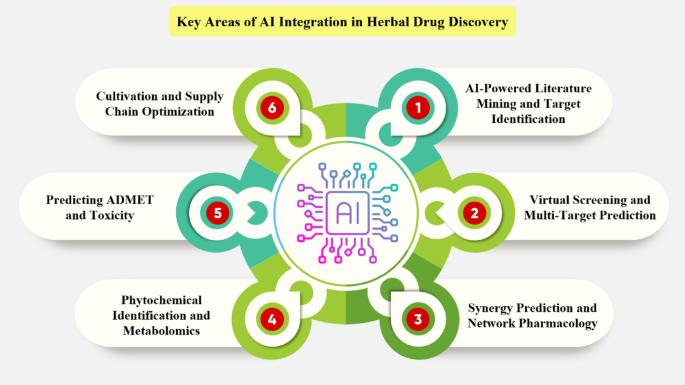
AI predicts Absorption, Distribution, Metabolism, Excretion, and Toxicity (ADMET) properties early in development, helping researchers eliminate compounds with poor safety or pharmacokinetic profiles before expensive laboratory and clinical studies [6].
AI in Natural Product Drug Discovery
Natural products remain an important source of therapeutic compounds. AI enables researchers to predict the biological activity of plant, microbial, and marine-derived compounds, prioritize promising candidates, and optimize their structures for improved drug development [7].
Why 2026 Is a Turning Point
The rapid adoption of AI in drug discovery is driven by three major developments:
- Availability of large-scale genomic, proteomic, and biomedical datasets.
- Advances in deep learning, graph neural networks, and generative AI.
- Highly accurate protein structure prediction using AlphaFold, enabling faster structure-based drug discovery [4,8].
In addition, leading pharmaceutical companies are increasingly partnering with AI-driven biotechnology firms to accelerate research and innovation.
Benefits of AI in Drug Discovery
AI is improving pharmaceutical research by:
- Accelerating target identification.
- Designing novel drug molecules.
- Predicting drug safety earlier.
- Supporting drug repurposing.
- Reducing research costs.
- Improving clinical trial success.
- Advancing precision medicine.
These capabilities enable researchers to develop safer and more effective therapies more efficiently [2,6].
Challenges
Despite its potential, AI-assisted drug discovery still faces challenges, including limited access to high-quality data, model transparency, regulatory acceptance, experimental validation, and intellectual property considerations. Human expertise remains essential for validating AI-generated predictions and translating computational discoveries into approved medicines [3,6].
Swalife Biotech’s Vision
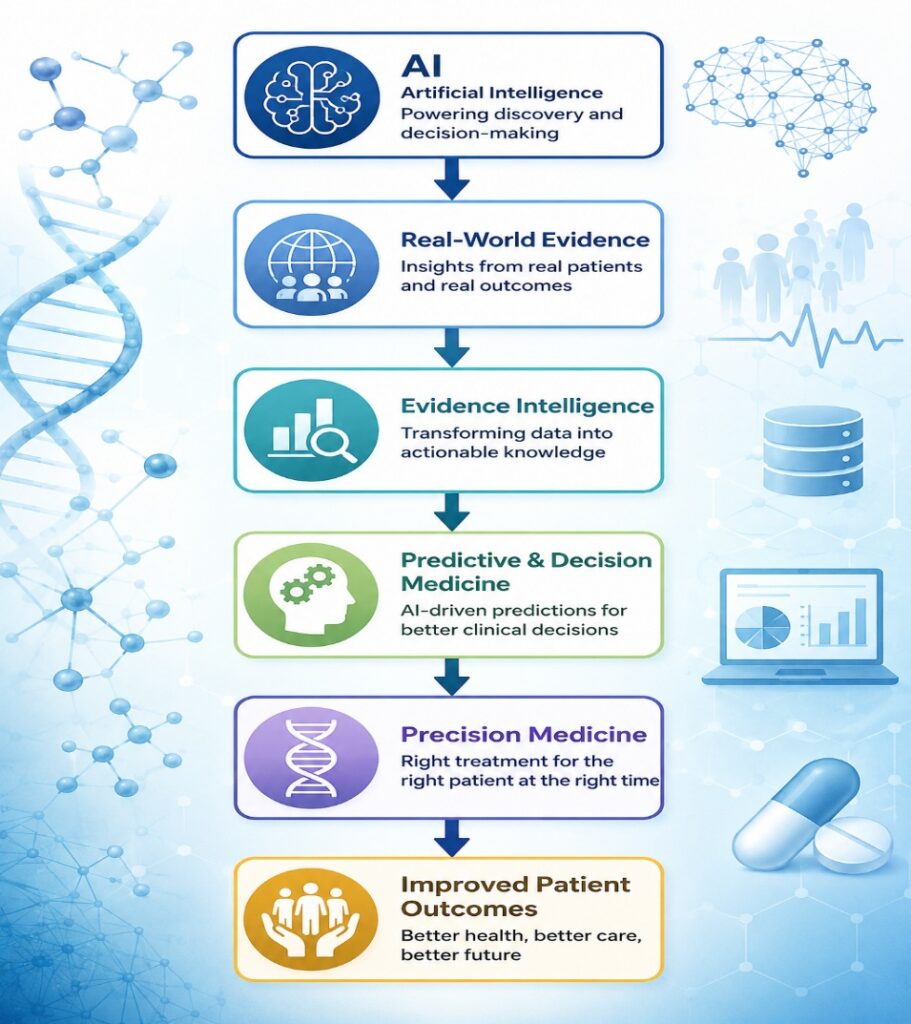
Swalife Biotech believes AI will play a central role in the future of pharmaceutical innovation. By integrating Artificial Intelligence, Evidence Intelligence, Predictive & Decision Medicine Intelligence (PDMI), Real-World Evidence, and precision medicine, the organization aims to accelerate scientific discovery, support evidence-based decision-making, and improve patient outcomes through data-driven research.
Conclusion
Artificial Intelligence is redefining drug discovery by making pharmaceutical research faster, smarter, and more efficient. From target identification and molecule generation to ADMET prediction and natural product research, AI is accelerating every stage of the drug development pipeline. Although challenges remain, continued advances in AI will reshape pharmaceutical innovation and enable the development of safer, more personalized therapies for patients worldwide [2,4,8].
References
- DiMasi JA, Grabowski HG, Hansen RW. Innovation in the pharmaceutical industry: New estimates of R&D costs. Journal of Health Economics. 2016;47:20–33. https://doi.org/10.1016/j.jhealeco.2016.01.012
- National Academies of Sciences, Engineering, and Medicine. The Role of Digital Health Technologies in Drug Development. Washington, DC: National Academies Press; 2020. https://nap.nationalacademies.org/catalog/25638/the-role-of-digital-health-technologies-in-drug-development
- Vamathevan J, Clark D, Czodrowski P, et al. Applications of machine learning in drug discovery and development. Nature Reviews Drug Discovery. 2019;18(6):463–477. https://doi.org/10.1038/s41573-019-0024-5
- Jumper J, Evans R, Pritzel A, et al. Highly accurate protein structure prediction with AlphaFold. Nature. 2021;596(7873):583–589. https://doi.org/10.1038/s41586-021-03819-2
- Zhavoronkov A, et al. Deep learning enables rapid identification of potent DDR1 kinase inhibitors. Nature Biotechnology. 2019;37(9):1038–1040. https://doi.org/10.1038/s41587-019-0224-x
- Ekins S, Puhl AC, Zorn KM, et al. Exploiting machine learning for end-to-end drug discovery and development. Nature Materials. 2019;18(5):435–441. https://doi.org/10.1038/s41563-019-0338-z
- Atanasov AG, Zotchev SB, Dirsch VM, et al. Natural products in drug discovery: Advances and opportunities. Nature Reviews Drug Discovery. 2021;20(3):200–216. https://doi.org/10.1038/s41573-020-00114-z
- Abramson J, Adler J, Dunger J, et al. Accurate structure prediction of biomolecular interactions with AlphaFold 3. Nature. 2024;630:493–500. https://doi.org/10.1038/s41586-024-07487-w